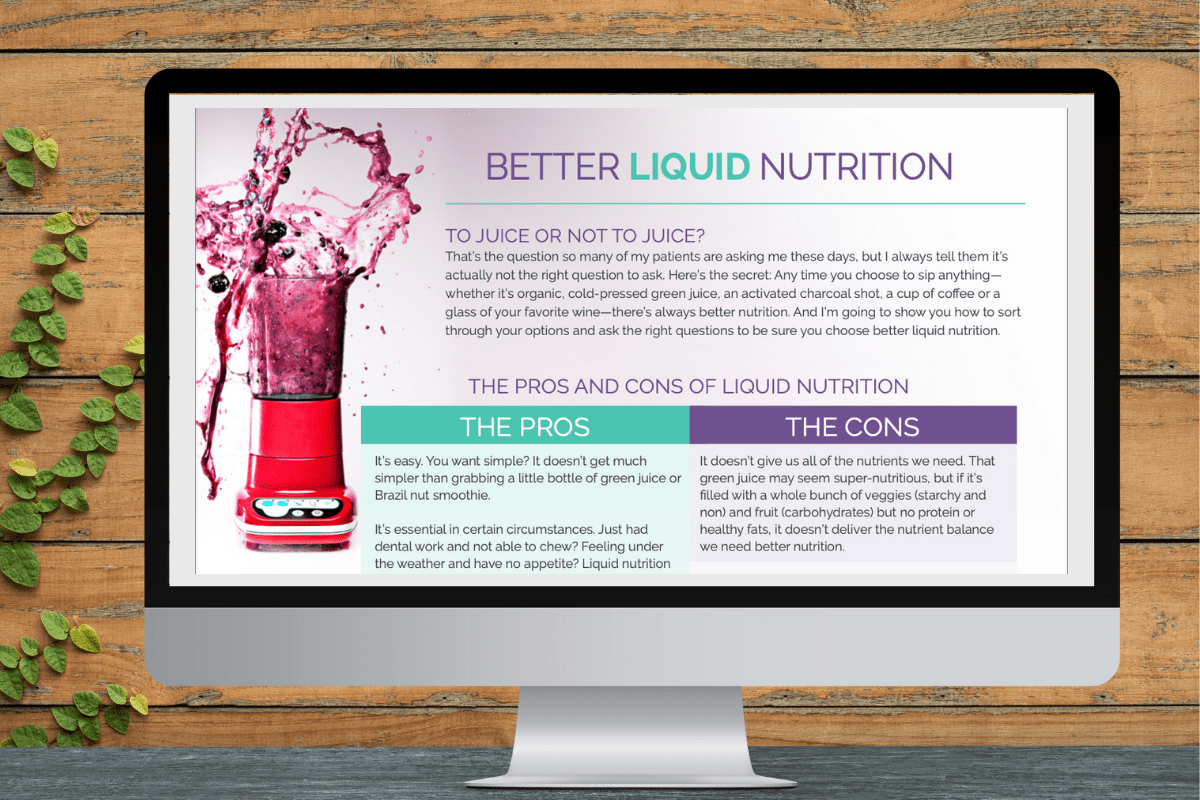

Smoothies can be a quick pit stop that delivers your body the nutrients it needs in a form (liquid) that doesn’t require additional digestion to use. So that makes them a great choice on waking, on-the-go, when stressed, when trying to increase nutrient amounts without excess calories, and when trying to heal. But if a smoothie isn’t nutrient-balanced, it can send your blood sugar on a rollercoaster. This often leads to energy crashes, fatigue, cravings, and irritability shortly after drinking them. The good news? With a few simple swaps, you can build a smoothie that’s both delicious and blood-sugar-friendly.
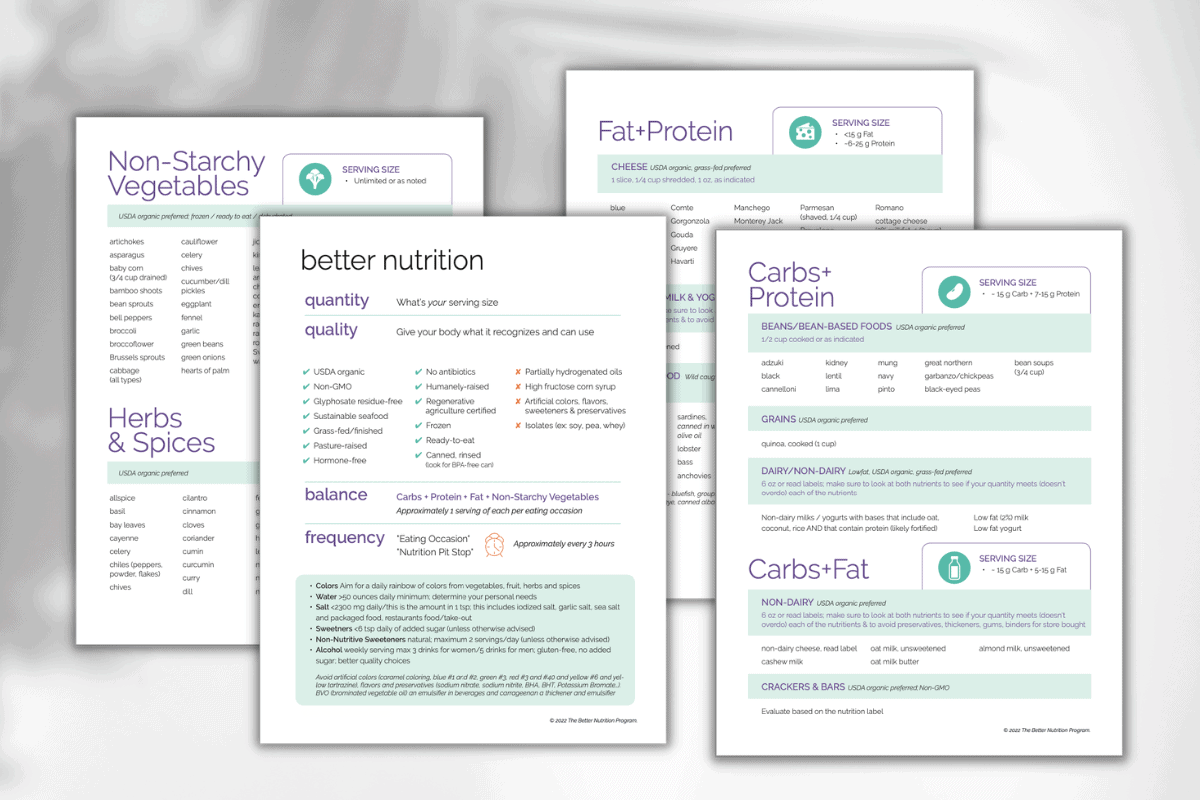
A good starting point for nutrient balance in a smoothie (if it is the only thing you have at a pit stop – meal or snack) is:
- Carbohydrates 15-30g
- Protein 15-40g*
- Fat 5-15g
- Fiber >7g
- Unlimited non-starchy vegetables, herbs, spices
Here are some ways to make this happen, deliciously:
- Balance your carbs:
- Only use a liquid base with carbs IF you are not adding any other food / ingredient with carbs. Or balance them:
- Skip dairy milk and non-dairy milks that are higher in carbs (rice, oat, soy etc.)
- Skip juices, fruit waters (coconut, watermelon, etc.) and fruit concentrates
- If you want dairy milk or cashew, oat, soy etc. then choose a half serving and use water or an unsweetened version for your additional liquids
- Choose unsweetened non-dairy milks like almond, hemp, coconut
- Choose herbal teas or infused waters
- Avoid beverage bases sweetened with nonnutritive sweeteners
- Choose carb-containing foods/ingredients strategically
- If your protein powder or source has carbs then skip carbs in your liquid base
- If you choose fruit, start with the ones that have less sugar (the ones we eat the skins of) or go halves with a sweeter one and a non-starchy vegetable like ½ a banana and ¼ cup of frozen cauliflower
- Not sure what form of fruit to use for your smoothies? Use this scale!
- Fruit w skin > Fruit where skin/peel is removed X Dried Fruit X Fruit Juice
- Fruit w skin > Fruit where skin/peel is removed X Dried Fruit X Fruit Juice
- Not sure what form of fruit to use for your smoothies? Use this scale!
- Only use a liquid base with carbs IF you are not adding any other food / ingredient with carbs. Or balance them:
- Get in enough protein but don’t over do it. Protein stabilizes blood sugar and keeps you full longer. But too much overwhelms digestion, can elevate blood sugar (or keep it elevated for longer) and can turn into fat.
- Protein powder (whey, collagen (not a complete protein), or plant-based)
- Amino acids – glutamine, creatine, taurine, leucine and others can be added
- Yogurt – full or low-fat, monitor carbohydrate amount
- Cottage and ricotta cheeses
- Nuts and seeds (and their nut/seed butters) – evaluate fat and carbohydrates
- Add quality fats, in better amounts. Healthy fats slow sugar absorption, help you feel full, include key nutrients and antioxidants and can make your smoothie more satisfying. But too much fat isn’t better.
- Nut butter (almond, peanut, cashew)
- Avocado
- Coconut oil or MCT oil
- Ground flaxseed, hemp and chia seeds
- Get in your fiber. Even though the blender may break up some fiber, smoothies are still a great way to get in this key source of fuel for probiotics to nurture your microbiome and weight-health hormones.
- Choose a protein powder that contains a fiber source(s) like resistant starches, soluble and insoluble fibers.
- Resistant – Green banana flour, raw oats, inulin/ chicory root, chickpea, white bean, tapioca starch
- Insoluble – psyllium, hemp and pumpkin seeds, wheat and oat brans
- Soluble – psyllium, hemp, chia, flax seeds, avocado, lentils
- Choose a protein powder that contains a fiber source(s) like resistant starches, soluble and insoluble fibers.
- Enhance With Weight-Health Hormone Optimizers
- Consider adding ingredients that naturally support hormones & blood sugar:
- Cruciferous vegetables (i.e., broccoli, cauliflower)
- Citrus (i.e., grapefruit, bitter orange, lemon/lime peels)
- Turmeric
- Resistant starches (i.e., green bananas, plantains, lentils, chickpeas, raw oats)
- Blueberries
- Pomegranete
- Beets
- Dandelion greens
- Extra virgin olive oil
- Cacao/cocoa
- Coffee
- Green tea
- Consider adding ingredients that naturally support hormones & blood sugar:
PRO TIPS: Avoiding Common Ready-to-Drink Smoothie Pitfalls
Many “healthy” smoothies sneak in extra sugar without you realizing it:
- Made with fruit juices, sweetened milks/yogurts/protein powders, or added sweeteners like honey, maple syrup, agave. Read the ingredient label to see how much carbohydrate and if there is sugar/added sugars
(Note for every 4g of sugar that is about 1 tsp of added sugar) - Will kick your sweet taste buds into overdrive with a lot of “sweetness” from nonnutritive sweeteners (yes, even “natural” ones can do this like stevia and monk fruit).
- Don’t eat only one color – Sip the rainbow! Smoothies are a great way to get in a variety of colors which in turn deliver a variety of plant compounds (antioxidants, polyphenols) and micronutrients
- Just because something claims it’s healthy, doesn’t mean it is! Check out our quality guide to assess the ingredient choices in any ready-to-drink proteins you are having regularly.
- Check the serving size. Often the promoted amounts on the front of the bottle or menu require you to consume more than one serving, exceeding the macros that are better for your body at that pit stop.
- Pass on fortification. Check to see if you are getting in extra vitamins and minerals not from food but from added ingredients. Often these “supplements” aren’t better quality and the amounts can cause excess and imbalances with your other supplements. At minimum, factor them into your “total” nutrition when working with your practitioner on your supplement protocol.
- Drink your water too – even before you have your smoothie. Optimize nutrient absorption and have your smoothie once you’ve quenched your body’s hydration needs. Start with 8-10 oz before your smoothie.
- Slow down. Drinking a smoothie fast is easy because its a liquid. Try taking pauses for 10 full breaths at least a third of the way into and two-thirds of the way through your smoothie.
Here’s another question: Are you building your nutrition around your biology — or just blending and hoping for the best?
If you’re ready for a personalized BNP plan designed around your hormones, metabolism, and goals, you can learn more here.