
To supplement or not to supplement is not the question. Whether you’re vegetarian, pregnant, training hard, taking a GLP-1 medication, or living with a condition that affects absorption, your body needs optimal iron to run better. Not more iron. Optimal iron.
Optimal means enough iron, in a usable form, in the right place, at the time your body needs it.
Here’s what usually happens instead. Your energy tanks. You’re losing more hair than normal. Maybe your ferritin came back low and someone handed you a bottle of ferrous sulfate and sent you on your way. Three months later you’re constipated, your labs have barely moved, and you still feel awful.
That’s not a plan. That’s a guess.
It’s time to break up with the notion of “low iron, take a supplement.” There is so much more to assess to understand the root cause of an iron insufficiency or a frank deficiency, and to build the better plan for your body.
In this article you’ll learn:
- Why the ferritin thresholds just changed, and what that means for your last lab result
- Which labs actually tell the story, because a CBC and a ferritin are not enough
- What Sucrosomial® iron is, and why the research compares it to an iron infusion
- How iron affects your weight health, your thyroid, and your GLP-1 response
- Answers to the iron questions I get asked most
First: your “normal” ferritin may not be normal anymore
In September 2026, the American Society of Hematology released updated ferritin thresholds, and they roughly doubled the old cutoffs. This matters enormously if you’ve ever been told your iron was fine.
The old WHO and CDC standard flagged deficiency in healthy adults 15 and older only below 15 µg/L. Here’s where the thresholds sit now:
- Healthy adults: 30 µg/L or lower
- Pregnant: 30 µg/L or lower
- Pregnant with anemia: 50 µg/L or lower
- Chronic inflammatory disease: under 100 µg/L, or a TSAT under 20%
- Children ages 5 to 14: under 24 µg/L, revised from roughly 15
Read that again if you were told a ferritin of 22 was “within normal limits.” Under the current thresholds, that result is iron deficiency. A large number of people, women especially, have been walking around symptomatic with a lab flagged normal by a standard that no longer holds.
I wrote about what changed and why in detail over on my Substack. For our purposes here, the takeaway is simple: go pull your last ferritin result and look at the actual number, not the flag next to it.
Why a supplement still shouldn’t be the automatic answer
Even with a genuinely low ferritin, starting iron the moment a number looks low can mask what’s actually going on. Low iron is usually a downstream signal of something else: inflammation, a digestion problem, blood loss you haven’t investigated, a copper or vitamin A insufficiency, a medication, or a diet that’s fine on paper but isn’t being absorbed.
An iron supplement can also make the underlying problem worse. Iron is a gut irritant. If inflammation or poor digestion is part of why your iron is low, pouring iron into that environment compounds it. That’s the irony most people never hear.
And a supplement is only one input. Your food, your drinks, your other supplements, your medications, even your skincare routine all factor into your iron status and your total nutrition. We look at all of it.
What iron actually does in your body
Iron is on your better energy team. Hemoglobin, the iron-containing protein in your red blood cells, picks up oxygen and delivers it everywhere. Your metabolism, the work of breaking nutrients down into usable energy, requires iron at the mitochondrial level to make ATP. Building and holding muscle requires it. Your thyroid needs it to make thyroid hormone. Your immune system uses it. Your brain uses it to make dopamine.
Which is why “low iron” rarely shows up as one tidy symptom. It shows up as fatigue, hair shedding, cold hands, breathlessness on stairs you used to take easily, restless legs at night, brain fog, workouts that stop delivering, and cravings that feel bigger than willpower.
The labs: why ferritin alone can’t answer the question
Ferritin answers one question of the several that matter: how much iron is in reserve. It tells you nothing about whether that iron is being transported, whether your cells can get it, or whether inflammation is inflating the number.
Here’s the fuller picture I work from. You don’t need every one of these every time. Which ones matter depends on you, your symptoms, and your history.
Digestive Assessement
We always start here because it determines how your body uses what it gets. We do this as the foundation for every weight health plan. Then we reassess. So if your digestion is off, we know it will impact your iron story.
The iron picture itself
- Ferritin, your storage form, read against the current thresholds above and never in isolation.
- TSAT (transferrin saturation), which shows what percentage of your iron transport capacity is actually carrying iron. A TSAT under 20% alongside a normal or even high ferritin is the signature of functional iron deficiency: iron in the bank, none of it circulating to where it’s needed. This is the pattern that gets missed the most.
- A complete iron panel, not just serum iron: serum iron, TIBC, and UIBC.
- CBC with differential and indices: MCV, MCH, and especially RDW, which often shifts before hemoglobin does.
Why your labs look the way they do
- hs-CRP. Inflammatory signals like IL-6 raise hepcidin, which cuts absorption and locks up your stores, and inflammation simultaneously makes ferritin read falsely reassuring. Reading a ferritin without a CRP beside it is how a real deficiency stays hidden behind a normal number.
- The partner nutrients: vitamin A, which releases iron from storage; copper and ceruloplasmin, required to move iron out of the gut; vitamin B12, folate, and vitamin D.
- Thyroid panel, because the relationship runs both directions.
- Sources of loss and malabsorption: alcohol intake, stress, workouts, medications, celiac screening, H. pylori, stool occult blood, and a hormone or cycle assessment when heavy periods are in the picture.
Your labs tell me the what. Your food, drinks, supplements, medications, and symptoms tell me the why, and the why is what we actually get to treat.
Food first, and what helps or blocks absorption
Will food alone do it? Sometimes, and it depends on three honest questions. Will you eat the food, and enough of it? Is your digestion working well enough to get the iron where it needs to go? Are you getting the nutrients that help iron get absorbed?
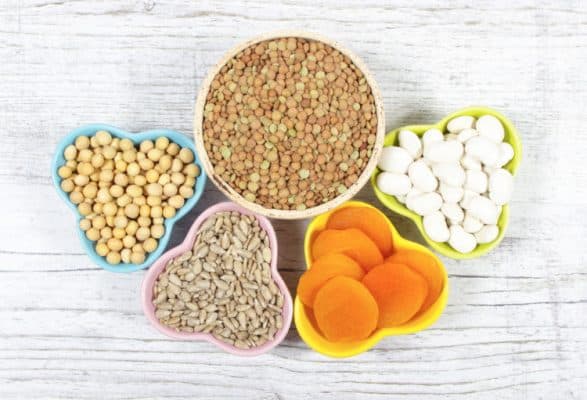
Plants deliver more iron than you’ve been told. Your pulses (lentils, chickpeas, beans), hemp hearts, cooked spinach and other dark leafy greens, olives, pumpkin and sesame seeds. Whole grains like bulgur, barley, and quinoa bring 1 to 2 mg per cooked cup. On the animal side, pork liver and mollusks like oysters top the list, joined by beef, beef liver, and quality fish like wild salmon. Cooking in a cast iron pan adds a little more.
Pair for absorption. Vitamin C rich foods eaten alongside iron rich foods meaningfully increase what you take in. Lemon on your lentils, bell peppers in your grain bowl, strawberries with your hemp hearts.
Separate the competitors. Calcium (in food, supplements, and some medications), zinc at high doses, coffee, tea and fiber supplements all challenge iron absorption. That doesn’t mean you give them up. It means we put a couple of hours between them and your iron.
When a supplement makes sense, and what has changed
I’m not anti-supplement. Any time you can’t meet your needs from food and beverages, a supplement helps. I just want the one you take to actually work for your body.
Start with how you dose, not just what you take
Before we even get to forms: alternate-day single dosing often absorbs as well or better than daily or split dosing, with fewer GI complaints. A single dose transiently spikes hepcidin, which then blunts absorption of the next dose for roughly 24 hours. Taking iron every other day lets hepcidin fall back down first. More is genuinely not better here, and the every-other-day schedule is frequently the difference between a supplement someone tolerates and one they abandon in week three.
Then the form, which matters more than the milligrams
Ferrous salts (ferrous sulfate, fumarate, gluconate) are the most common. They work for some people. They also produce the side effects that make people quit: nausea, stomach pain, constipation, dark stools, metallic taste. And they’re fully gatekept by hepcidin, so if you’re inflamed, much of what you swallow never gets in. That’s how people end up “iron deficient despite supplementing,” and often end up referred for an infusion.
Iron bisglycinate is a chelated form that’s considerably easier on the system and a reasonable step up for people whose main barrier is tolerance.
Lactoferrin deserves more attention than it gets. It’s an iron-binding protein found in milk and secretions, and here’s the interesting part: despite delivering less absorbed iron than ferrous sulfate, research has found it produces better serum iron, ferritin, and hemoglobin results. The likely explanation is that lactoferrin is working on the inflammation driving the deficiency rather than just pushing more iron through the door. That’s the whole thesis of root-cause work, showing up in a single molecule.
Sucrosomial® iron: the option most people have never been offered
Sucrosomial iron (you’ll also see it written “sucrosomal,” and it’s a trademarked delivery technology, not a generic mineral form) is a genuinely different approach, and it’s the one I most often reach for now.
The iron, ferric pyrophosphate, is wrapped in a protective matrix of phospholipids and sucrose esters. That wrapper survives the stomach, so free iron isn’t dumped onto your gut lining. Free iron is what causes the nausea and constipation.
It also takes a different road in. Instead of relying solely on the standard DMT1 transporter that hepcidin shuts down when you’re inflamed, sucrosomial iron is taken up substantially through the M cells of intestinal lymphatic tissue and enters via the lymphatic route. Practically: far better tolerability, meaningfully higher bioavailability, and iron that keeps getting absorbed in the presence of inflammation, which is precisely when conventional iron fails.
Here’s the part that matters most. In a study of cancer patients with chemotherapy-induced anemia, 30 mg of oral sucrosomial iron daily performed on par with weekly 125 mg intravenous ferric gluconate: 70% versus 71% hemoglobin response, no statistically significant difference, comparable quality-of-life gains, identical transfusion rates, and zero iron-related adverse events in the oral group versus 6% in the IV group. Comparisons in non-dialysis chronic kidney disease have found comparable hemoglobin recovery at lower total cost.
That is a big deal. Infusions require a clinic, an IV line, hours of your day, real cost, and a small but genuine risk of reaction. They’re also not always sustainable, since the underlying reason you depleted is usually still there when the infusion wears off. For a meaningful number of people, an oral option now gets to a similar place.
To be clear about what this is and isn’t: some people truly need an infusion, and that decision belongs with your physician. But sucrosomial iron deserves a conversation before an infusion gets scheduled, and before you conclude that “oral iron doesn’t work for me.” What didn’t work for you was very likely ferrous sulfate, taken daily, on an inflamed gut.
You can get my preferred iron supplements here via our formulary, BNP members get an ongoing discount.
Can you have too much iron? Yes.
Your body can accumulate too much iron, usually from supplements and fortified foods rather than whole foods. It can also hold onto iron or fail to use it when something isn’t functioning properly, which is its own problem.
Excess stored iron, and free-floating unbound iron in particular, raises risk across cancers, heart disease, and diabetes, is implicated in the progression of Alzheimer’s and Parkinson’s, and accelerates cellular aging. Which makes sense once you understand what iron does.
This is exactly why we don’t supplement on a hunch, and why we re-assess instead of staying on a dose forever.
Your iron questions, answered
Could low iron be affecting my weight loss?
Yes, and this is one of the most commonly missed pieces in weight health.
Iron sits upstream of nearly every system that determines how your body builds, holds, and burns:
- Your thyroid. Thyroid peroxidase, the enzyme that builds thyroid hormone, is a heme enzyme. It requires iron. Low iron impairs thyroid hormone production and T4 to T3 conversion. Your labs can read “normal-ish” while your metabolic rate has quietly downshifted.
- Your muscle. Iron is required for oxygen delivery to working muscle and for the mitochondrial machinery that muscle runs on. Muscle is your most metabolically valuable tissue and the thing we are most trying to protect during any weight change. Low iron undermines your capacity to build it and to keep it.
- Your mitochondria and fat burning. Iron is required for the electron transport chain and for carnitine synthesis, which shuttles fat into mitochondria to be burned. Less iron means less fat oxidation and lower aerobic capacity, measurable long before you’re anemic.
- Your brown adipose tissue. BAT is exceptionally iron- and mitochondria-dense, and its thermogenic function depends on adequate iron. This is metabolically active tissue you want working.
- Your hormones. Iron status intersects with testosterone metabolism, which matters for body composition in everyone, not only men.
- Your bones. Iron is a cofactor in collagen cross-linking and vitamin D metabolism, both central to bone density. Bone is the quietest casualty of rapid weight loss.
- Your movement. When you’re iron depleted, you’re exhausted. Workouts shorten, recovery lengthens, and unconscious daily movement drops. That’s a real reduction in daily energy expenditure that no tracker records.
- Your cravings. Iron is a cofactor for dopamine synthesis. Low dopamine drives reward-seeking, which typically shows up as an intense pull toward sugar and refined carbohydrates. People describe it as a willpower failure. It’s frequently a nutrient gap.
- Your sleep. Low ferritin is strongly tied to restless legs and fragmented sleep, and poor sleep reliably disrupts appetite and satiety signaling the next day.
And it runs in reverse, which is the part almost nobody is told. Excess adipose tissue drives chronic low-grade inflammation, inflammation raises hepcidin, and elevated hepcidin blocks absorption in the gut and locks iron into storage. You can eat plenty of iron and still be functionally iron deficient. That’s a normal or high ferritin with a TSAT under 20%, and it’s why ferrous sulfate so often fails in this population, and why the form you choose genuinely matters here.
So if fat loss has stalled, if your energy is flat, if your workouts have stopped giving anything back, iron belongs in the workup. Not as the whole answer. As one of the levers we check.
Does my GLP-1 medication affect my iron?
It does, and if you’re on one, this needs to be on your radar.
We now have direct measurement. In 51 people with type 2 diabetes starting semaglutide, iron absorption fell by a median of 13%, and roughly 18% of them absorbed at least 30% less than they had at baseline. A 2026 narrative review spanning more than 480,000 GLP-1 users found iron depletion to be a frequent finding.
Several things are happening at once:
- Delayed gastric emptying and altered gastric acid shift the conditions non-heme iron requires to be absorbed. That’s the mechanism behind the 13%.
- You’re eating less of everything. Iron is one of the hardest nutrients to cover at reduced intake even with excellent choices.
- Food aversions reshape the diet. Many people on these medications develop an aversion to meat and to legumes, two of the densest iron sources available. The foods that leave first are often the iron foods.
- Protein intake drops, taking heme iron and the amino acid matrix that supports non-heme absorption with it.
- Rapid weight loss raises demand at the precise moment intake falls, and the nutrient cost of defending muscle and bone climbs.
- Nausea leads to skipped supplements, and conventional ferrous salts are the first thing a queasy stomach rejects.
None of this is a reason to stop your medication. It’s the reason total nutrition has to be built alongside it rather than after the fact. This is exactly the gap our GLP-1 weight health optimization work is designed to close: keeping your nutrition, muscle, bone, and micronutrient status intact while the medication does its part. Iron is one of the nutrients I watch most closely in this group, and I want a baseline before you’ve been on the medication for a year, not after.
Am I getting enough iron on a plant-based diet?
You can absolutely meet your iron needs without meat. Pulses, hemp hearts, cooked greens, seeds, and whole grains do real work, especially paired with vitamin C. It’s worth adding that because excess iron carries its own risks, the somewhat lower absorption rate of plant iron may function as a built-in protection rather than a flaw. Food first, then a better quality supplement to fill what your body still needs.
How do I know if my iron levels are okay?
You need more than an annual CBC, and you need your ferritin read against the current thresholds rather than the old ones. Certain windows deserve a real look regardless of how you feel: planning a pregnancy or being pregnant, postpartum, perimenopause and menopause, heavy or changing periods, starting or being on a GLP-1, training for a significant physical event, any new digestive diagnosis, and any period of rapid weight change. Tell whoever is running your labs about all of it, planned or not.
I’m eating iron rich foods and taking a supplement, but my levels aren’t improving.
Then the supplement, the absorption, or the root cause is the problem, and it’s time to look properly. That means labs beyond a CBC and a ferritin (start with TSAT and hs-CRP), a total nutrition assessment, and an honest look at interference: coffee and tea timing, calcium in foods and supplements and medications, high-dose zinc, acid-reducing medications, digestive issues, ongoing blood loss, and inflammation. Then ask two more questions: was this form ever going to work for my gut and my hepcidin, and am I dosing it in a way my body can actually use?
My iron supplement makes me constipated and I can’t keep taking it.
Extremely common, and it’s usually the form and the frequency, not you. Move to alternate-day dosing. Consider bisglycinate, lactoferrin, or sucrosomial iron, which is built around this exact problem since the delivery matrix keeps free iron off your gut lining. Some formulas also pair vitamin C, which supports both absorption and motility. And your magnesium nutrition deserves assessment, because magnesium supports motility and is frequently needed when iron is added.
Let’s build your plan
Iron is not a bottle. It’s a system, and yours is specific to your labs, your food, your medications, your life stage, and what your body is currently doing with what you give it.
If your ferritin was called normal under the old thresholds, if you’re on a GLP-1 and want to protect your nutrition while you’re on it, if your weight health has stalled and nobody has looked at iron, or if you’ve been handed a supplement that isn’t working, let’s look at the whole picture together.
Book your free first session with my team here at The Better Nutrition Program, and we’ll talk through your labs, your symptoms, and what a personalized iron optimization plan looks like for you.








I really like it that you mentioned that the best iron supplements also contain vitamin C, magnesium, and herbs to keep the tummy healthy and moving. This is just what my dad needs to supplement his high-fiber, low-salt, and low-carb diet due to his diabetes. He needs an extra boost of vitamins and irons to replenish the blood he loses from losing sleep every night due to overthinking. I’ll make sure to buy him a bottle of this capsule for one month’s supply.
So glad you liked the article! Make sure you/your dad confirms with his doctor that he needs additional iron before taking any supplement.
Awesome article! I can relate to this from my own journey with chronically low iron. My low iron levels were due mostly in part to a SIBO infection. Therefore supplementing as I had been years before was not helping. Once the infection was cleared up, I was better able to absorb and utilize the iron rich foods I was eating and the liquid iron supplementation.
Thanks again for the wonderful information!
thank you Michele! We love hearing this and so proud of you for your personalized health win!
– Ashley Koff RD
Great information- though I’m not seeing your preferred sucrosomial iron brand in Fullscript? Can you share that along with dosing guidance? Thanks
I recommend Slider from Pharmanutra which looks out of stock here is a direct purchase option https://pharmanutra-us.com/bnp20 and I either use the serving recommended doing every other day or do daily if there is a rationale